



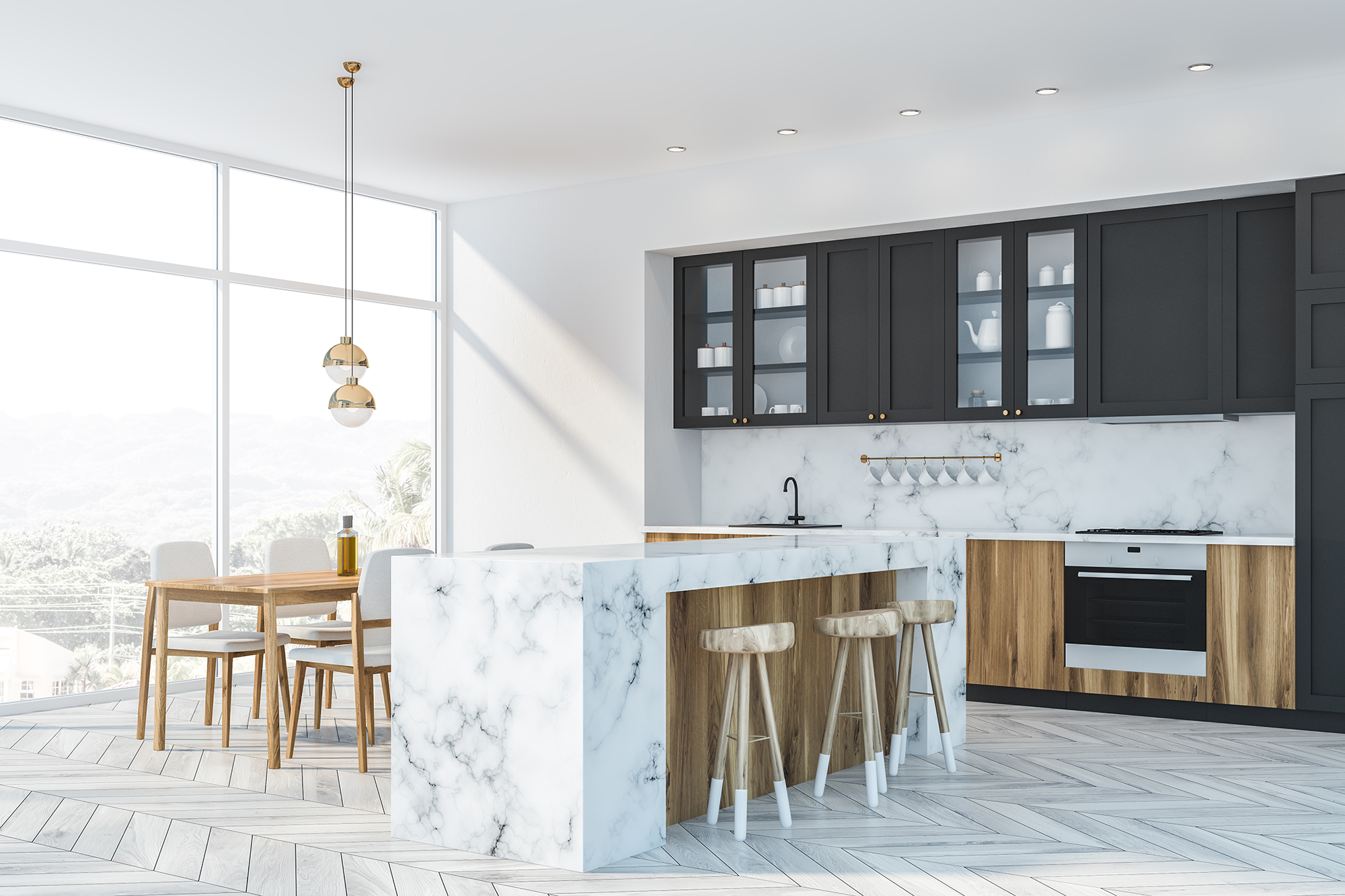
Marble is the countertop material people fall in love with, then panic-Google at midnight after the first lemon slice hits the surface. In Houston, that panic is usually faster because kitchens run hard: humidity swings, big-family cooking, entertaining, and constant wipe-downs. If you want marble and you want peace, you need to understand what marble is chemically, how it fails, and what “patina” actually means in daily life. If you want to see real slab movement, veining, and finish options in person, visit Carpet Giant at Houston, TX.
Etching vs Staining: The two problems everyone confuses
Etching is chemical. Marble is primarily calcium carbonate. Acids (citrus, vinegar, wine, many cleaners) react with it and leave a dull mark or “water spot” that is not water. That’s etching, and it can happen even on a perfectly sealed marble surface.
Staining is absorption. Oils, pigments, turmeric, coffee, and some sauces can migrate into pores and leave discoloration. Sealer helps with staining resistance, but it does not stop etching.
A practical rule:
If the spot looks dull or “chalky” under light, it’s probably etching.
If it looks darker or tinted and the finish is intact, it’s likely staining.
Finish choice is your biggest “peace” lever
For Houston kitchens, honed (matte) marble is usually the saner choice than polished.
Polished marble: higher shine, shows etches more clearly because the contrast between glossy and dull is obvious.
Honed marble: etches still happen, but they blend into the overall matte look, so the kitchen looks “consistent” sooner.
Hot take: if you want marble but hate “the first mark,” honed marble is the shortcut to calm. It’s not more durable, it’s just more forgiving visually.
Marble type matters: some etch and stain “differently”
Marble hardness varies a bit by quarry and composition. That doesn’t make any marble “acid-proof,” but it affects scratching and the look of wear. Ask to compare slabs and consider:
Carrara: classic, softer-looking veining, tends to patina quickly (which some love).
Calacatta / Statuario: bolder veining, often chosen for statement kitchens; treat it as a “show surface” with real rules.
Dolomite (often sold as marble): can be slightly more scratch-resistant than some marbles, but still etches. It’s not a cheat code.
Sealing: what it does, what it doesn’t, and how often in real life
Sealer reduces absorption. It doesn’t form a thick “top coat.” A good penetrating sealer buys you time to wipe up spills before they soak in.
How to know when to reseal: do the water-drop test in a low-visibility area. If water darkens the stone within 5–10 minutes, your sealer is losing effectiveness.
Typical Houston-kitchen reality:
Honed marble in heavy use: reseal roughly every 6–12 months depending on product and cleaning habits.
Polished marble: sometimes holds sealer slightly longer, but still needs periodic maintenance.
Avoid gimmicks: “Lifetime sealing” claims usually mean “we used a decent sealer once.” Real kitchens require re-evaluation.
Daily care: the protocol that prevents the “I regret this” spiral
Use pH-neutral stone cleaner or mild soap and water. Avoid acidic or abrasive cleaners.
Wipe fast: citrus, wine, tomato sauce, and vinegar-based dressings should be treated like “finish-threatening.”
Cutting boards and trivets: heat isn’t marble’s biggest enemy, but thermal shock and staining are real. Use barriers.
Microfiber over rough sponges. Abrasive pads can change sheen over time (especially on honed surfaces).
The “patina mindset”: choosing marble without trying to make it quartz
Marble is a living surface. The goal isn’t to keep it pristine forever. The goal is for wear to look intentional and even.
If you want a kitchen that looks perfect every day with zero behavior changes, choose quartz or porcelain. If you want a surface that develops character, marble can be amazing, especially in honed finishes with a thoughtful maintenance routine.
When marble is a bad idea
Skip marble if:
You use a lot of lemon, vinegar, or acidic marinades daily and don’t want extra steps.
You want no visible wear and you’ll resent the material for being itself.
You won’t commit to pH-neutral cleaning and quick wipe-ups.
Marble in a Houston kitchen is not a mistake, but it is a choice that needs technical clarity: etching is chemistry, sealer is for absorption, and finish selection is your biggest peace-maker. If you want help selecting the right marble, choosing a finish that fits your lifestyle, and building a maintenance plan you’ll actually follow, contact Carpet Giant or visit us to explore options. We proudly serve Houston, Kingwood, Spring, Sugar Land, West University, Katy, Meyerland, Cypress, Bellaire, Jersey Village, Missouri City, Pearland, Friendswood, League City, Deer Park, Tomball, Baytown, Memorial, Garden Oaks, Heights, and Clear Lake .


