



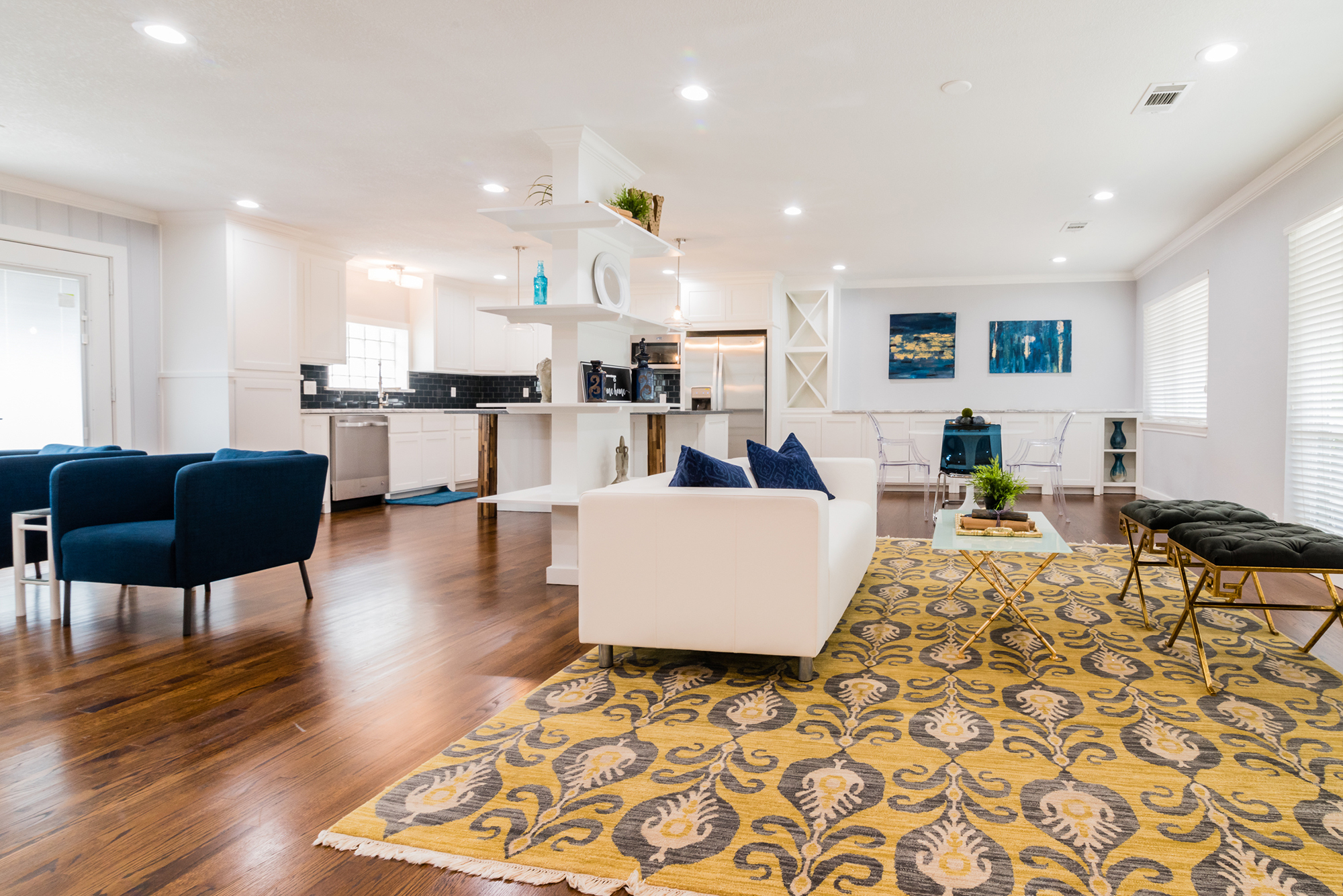
Rug layering is having its “grown-up era” in 2026. The trend used to be purely aesthetic. Now it’s solving real problems: echo-y open concepts, slippery hard surfaces, “my living room feels cold,” and the chaos of kids + pets. The difference between layered rugs that look designer and layered rugs that look accidental is technical: friction, pile interaction, edge treatment, and pad selection. If you want to feel textures in person and compare weaves under your actual lighting, visit Carpet Giant at Houston, TX.
The 2026 hot take: layering is about acoustics and comfort first, aesthetics second
Rug layering isn’t just a styling trick, it’s a practical bridge between big remodeling decisions and real daily comfort. A lot of Houston homeowners are upgrading to tile, laminate, or LVP for durability and easy maintenance, then realizing the space feels louder, colder, or visually “unfinished.” That’s where area rugs become a core part of the flooring system: they add acoustic control, soften hard-surface glare, protect high-wear paths, and help define zones in open-concept layouts without changing the permanent floor. At Carpet Giant, we often build rug-layering plans around the hard surface you choose first, so your tile/LVP/laminate install stays functional and your rooms still feel warm, quiet, and expensive.
Open-concept homes and hard-surface upgrades are everywhere, which means more footfall noise, more reverb, and less softness. A layered rug setup works like a “softness sandwich”:
Base layer: stability + scale (anchors furniture and defines zones)
Top layer: texture + personality (adds warmth and visual richness)
Pad layer: grip + protection (stops creep, reduces wear, improves comfort)
The Texture Formula: Pile Height + Fiber Friction + Contrast
Here’s the niche, repeatable formula designers actually follow, even if they don’t call it this:
1) Pile Height Pairing (the “step-down” rule)
Layering succeeds when your top rug is equal or lower pile than the base. If you do higher pile on top, the edges lift, furniture wobbles, and it reads messy fast.
Best pairings:
Flatweave base + low-pile patterned top
Low-pile base + low-pile vintage-style top
Performance base + thin accent hide or tufted top (secured correctly)
2) Fiber Friction (why some rugs won’t stay put)
Different fibers behave differently on different floors. Friction matters more in Houston homes where air conditioning, airflow, and daily traffic can make rugs “walk.”
High-grip fibers: wool, textured polypropylene, some jute blends
Low-grip fibers: viscose (can slide and show crushing), some smooth synthetics
If you’ve ever felt a rug shift every time you vacuum, that’s low friction plus the wrong pad.
3) Contrast that looks expensive (not loud)
The 2026 look is quiet contrast:
Texture contrast (flat + plush)
Sheen contrast (matte base + slightly higher sheen top)
Pattern contrast (subtle base + defined top)
Avoid pattern-on-pattern unless one is very low contrast. That’s how “designer layering” becomes “busy layering.”
Pad Specs That Make or Break Layering
Most rug problems are pad problems wearing a rug costume.
Use the right pad for the right job
For slip control on hard surface: felt + rubber combo pad
For plush comfort: thicker felt pad (with grip layer if on hard surface)
For carpet-on-carpet layering: a specialized carpet-to-carpet pad or rug tape system (standard rubber pads can bunch and cause ripples)
Technical target: choose a pad that supports the rug without “telegraphing” texture bumps. If you see pad texture through the rug, the pad is too firm or the rug is too thin.
Room-by-room Layering Recipes (practical, not Pinterest fantasy)
Living room (open concept)
Base: 8' x 10' or 9' x 12' flatweave to catch front legs of all seating
Top: 5' x 7' or 6' x 9' low-pile patterned rug centered under coffee table
Goal: define zone, reduce echo, add texture where your eyes land
Bedroom (the “warm feet” blueprint)
Base: large low-pile or plush rug under bed, extending 18" to 24" on sides
Top: runner on the side you step out on most
Goal: softness where it matters, easier cleaning than wall-to-wall
If you’re torn between wall-to-wall carpet and rugs, layering can be the middle path.
Dining room (the durability test)
Base: low-pile, stain-friendly material with tight construction
Top: usually skip. Chairs need a stable glide surface
Rule: if you insist on layering, keep both layers low pile and use a pad that prevents chair “grab.”
Entryway (Houston mud + grit reality)
Base: durable flatweave or performance rug
Top: small accent only if it’s secured (otherwise it becomes a trip hazard)
Pro move: use a runner with proper edge finish to stop curling
Edge detailing: the expensive look lives on the border
Two details instantly upgrade layering:
Bound edges on custom cuts (prevents fray, looks tailored)
Correct overlap spacing: let the base rug show 8" to 14" around the top rug so it looks intentional
If you’re shopping rugs, start with a curated selection and build your stack from there.
Rug layering in 2026 is not “more rugs = more style.” It’s a system: correct pile pairing, fiber friction, and pad specs that make rooms calmer, warmer, and visually expensive without being precious. If you want help building a rug stack that works with your floors and lifestyle, contact Carpet Giant. We serve Houston, Kingwood, Spring, Sugar Land, West University, Katy, Meyerland, Cypress, Bellaire, Jersey Village, Missouri City, Pearland, Friendswood, League City, Deer Park, Tomball, Baytown, Memorial, Garden Oaks, Heights, and Clear Lake . Visit us at Houston, TX or reach out to schedule a design consult and see textures in person.


